
Frequently Asked Questions
Covering service scope, lead time, precision, materials, confidentiality, MOQ, quality inspection and our working process
All
DLP 3D Printed Shoes
Lead Time and Delivery
Precision and Materials
Drawing Confidentiality
Orders and MOQ
Certifications and Reports
Quotation and Process
Q1: What manufacturing services does the company offer?
We provide a full closed-loop service covering all major industrial 3D printing processes (SLA, SLS, SLM, DLP, FDM and FGF), 5-axis CNC precision machining, silicone mold casting for low-volume production, custom sheet metal fabrication, integrated surface finishing and complete machine assembly. Value-added services include industrial design, 3D modeling, drawing and process review, cost-reduction structural optimization and dimensional inspection reports.
Q2: How long do prototypes and low-volume production usually take?
We run 24-hour continuous production. Rush orders can be sampled within 24 hours, and low-volume production is generally delivered in full within 72 hours, which suits trade shows, product launches and urgent research work. The final lead time is subject to the engineering assessment after drawing review.
Q3: What machining precision can you achieve?
Standard parts are consistently machined to ±0.02 mm, ultra-high-precision parts can also reach ±0.02 mm, and CNC repeat positioning accuracy is ±0.02 mm. Coordinate measuring equipment is used for full dimensional inspection, with a 99.5% yield rate. Actual precision figures are subject to the engineer's drawing review.
Q4: Which materials do you support?
We support more than ten material types, including resin, nylon, carbon fiber, TPU, aluminum alloy, stainless steel, titanium alloy and high-temperature alloys. We recommend the matching material and process based on the part's application (appearance part, functional part or structural part).
Q5: Is a hard mold always required for low-volume production?
Not necessarily. Our silicone mold casting service supports low-volume runs of tens to thousands of parts without a hard mold, replacing conventional injection molding tooling and reducing the cost of new-product R&D and trial sales.
Q6: How are drawings and project information kept confidential?
We have built an end-to-end confidentiality system that includes drawing encryption, a dedicated secure workshop, a dedicated project group, 24-hour surveillance, operation audit trails and an access-reset mechanism, protecting unreleased products, research projects and classified programs.
Q7: Is there a minimum order quantity?
We support needs ranging from single-piece prototyping to volume production. R&D prototypes can start from one piece, low-volume runs of tens to thousands of parts can be produced by silicone mold casting, and large orders are handled by 500+ machines across two bases running 24 hours a day.
Q8: Can you provide quality inspection reports?
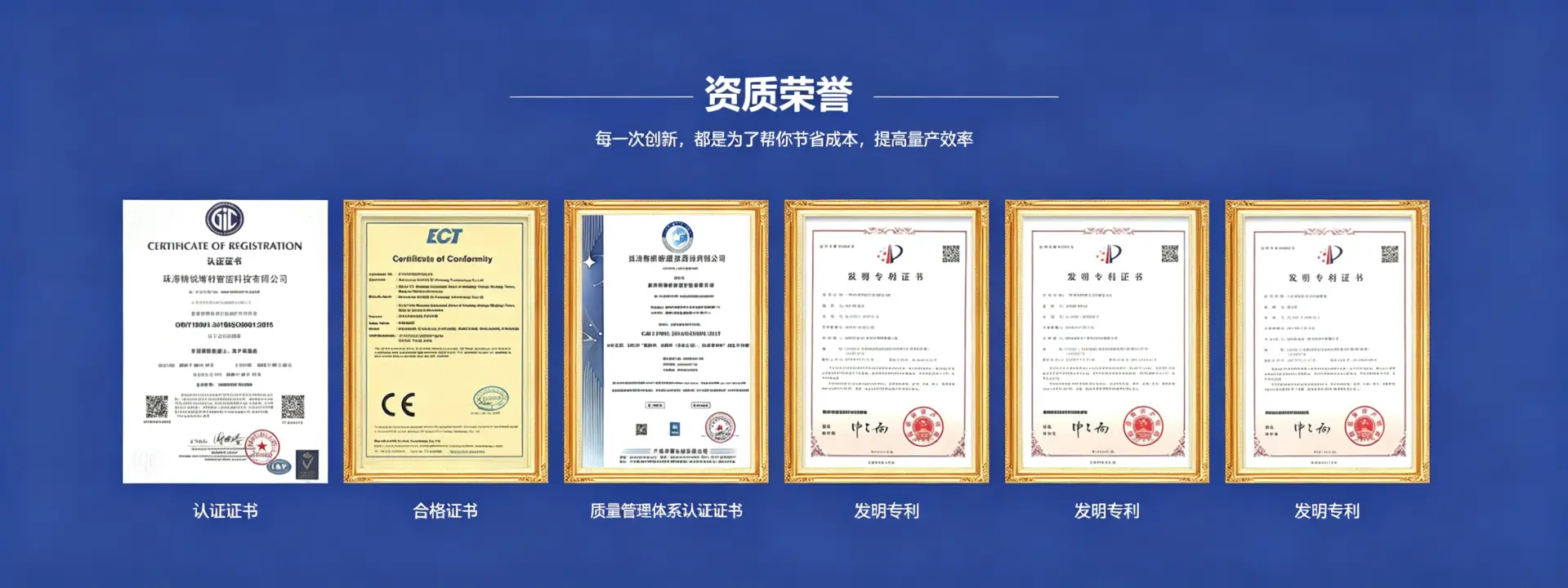
Yes. We follow the ISO9001 and ISO13485 quality management systems and can issue professional dimensional inspection reports. We also hold SGS raw-material testing certification and RoHS EU environmental certification, and can provide the corresponding material compliance test reports on request.
Q9: Can you take orders from the medical device and automotive industries?
Yes. We follow the ISO13485 medical device quality management system and are certified to IATF16949 for automotive quality management. We have long supplied machined medical precision components and automotive parts to customers in the medical device and new-energy vehicle industries.
Q10: How do I get a quotation, and what is the working process?
Contact us through the website and an engineer will be assigned as your one-to-one contact. We provide free drawing and process review plus structural optimization advice, then quote after confirming the process plan and lead time. Once confirmed, the order moves to scheduling and production, tracked by a dedicated project group throughout, with 7×24 technical after-sales support.
Q11: Can orders be expedited, and how are rush fees calculated?
We offer a 24-hour expedite channel. Rush fees are assessed based on part complexity, material type and quantity, and a rush surcharge is applied on top of the base quotation. For trade shows, product launches and similar urgent situations, engineers can prioritize scheduling after assessment to ensure on-time delivery.
Q12: What is the lead time for large orders?
Large orders are handled by our dual bases—Zhuhai R&D plus Dongguan volume production—with 500+ industrial machines running 24 hours a day. The exact lead time depends on order quantity, process complexity and scheduling. After drawing review the engineer provides a clear staged delivery plan, typically shipping on a rolling monthly basis.
Q13: Can orders be delivered in batches?
Yes. For larger quantities we support batch production and staged delivery, easing inventory pressure and aligning with your production line takt. Every batch goes through the same quality inspection standard to ensure batch-to-batch consistency.
Q14: What happens if the lead time is delayed?
We have a robust production progress synchronization mechanism, and the dedicated project group updates progress daily. If force majeure or equipment issues affect the schedule, the project manager contacts the customer immediately and starts a backup line or adjusts the process plan to minimize the impact of the delay.
Q15: What is the difference in precision between 3D printing and CNC machining?
3D printing (SLA/DLP) typically achieves ±0.02 mm, suited to complex structures and appearance verification; CNC machining achieves ±0.02 mm with ±0.02 mm repeat positioning, suited to high-precision functional and assembly parts. The engineer recommends the process based on drawing structure, tolerance requirements and application.
Q16: Can you make transparent parts, and how clear are they?
Yes. Using high-transparency resin (such as PMMA-type clear resin) printed by SLA/DLP and post-processed by sanding, polishing and UV curing, we achieve an optical result close to injection-molded clear parts, suitable for appearance verification, lamp lenses and lampshades, and transparent housings.
Q17: Can you work with high-temperature materials, and what is the maximum temperature?
We support a range of high-temperature materials. High-temperature resin has a heat deflection temperature of 80-120℃; nylon is rated around 120℃ for continuous use; high-performance engineering plastics such as PEEK can exceed 250℃; and metals such as titanium alloy and superalloys withstand even higher temperatures. Please consult an engineer for the right grade.
Q18: Can you provide material certificates?
Yes. All raw materials come from reputable branded suppliers, and we can provide mill certificates (COA), SGS test reports and RoHS environmental certification, meeting the material traceability and compliance requirements of the automotive, medical and electronics industries.
Q19: Can we sign a non-disclosure agreement (NDA)?
Yes. We can sign a formal non-disclosure agreement (NDA) with customers, creating legally binding confidentiality obligations covering drawings, product information and project details. All classified projects run under our confidentiality system, including drawing encryption, a dedicated secure workshop, a dedicated project group, 24-hour surveillance, operation audit trails and access-reset controls.
Q20: Are drawings deleted after production is completed?
After a project ends, customers may request deletion of drawings and related project data. Our access-reset mechanism lets us fully erase drawing files from servers and workstations on request, with a data destruction confirmation record issued, ensuring unreleased product information does not leak.
Q21: Where is project data stored, and is it secure?
Project drawings and data are stored on our internal encrypted servers with tiered access rights, visible only to project personnel. The servers are protected by firewalls and intrusion detection systems and backed up regularly to prevent data loss and leakage. Classified project data is stored in physically isolated systems.
Q22: Can I order just one sample?
Yes. We accept orders ranging from single-piece prototypes to volume production. Single-piece prototyping suits appearance verification and functional testing during new-product development; the engineer will recommend a cost-effective process to help you validate at low cost.
Q23: What is the maximum quantity for silicone mold casting?
Silicone mold casting suits low-volume runs of tens to thousands of parts. One silicone mold can produce 10-30 copies depending on material and geometry; running multiple molds in parallel enables deliveries of hundreds to thousands of parts, without hard tooling, greatly reducing low-volume trial production costs.
Q24: Do you accept customer-supplied materials?
Yes, we accept customer-supplied materials. You provide blanks or raw material, and we carry out CNC finishing, surface finishing and assembly. For customer-supplied material, the customer must ensure the specification and quality meet machining requirements; our engineers inspect and evaluate incoming material before confirming the process plan.
Q25: Which management system certifications do you hold?
We hold ISO9001 quality management, ISO13485 medical device quality management, IATF16949 automotive quality management and ISO14001 environmental management certifications, among other international certifications, along with SGS raw-material testing and RoHS EU environmental certification.
Q26: Can you provide RoHS/REACH reports?
Yes. Our raw materials comply with RoHS and REACH EU environmental directives. We can provide third-party RoHS hazardous substance test reports and REACH compliance declarations to meet EU export market requirements.
Q27: What does a CMM inspection report include?
The CMM inspection report includes the part number, inspection date, inspection equipment, measured values versus tolerances for key dimensions, geometric tolerance results (flatness, perpendicularity, coaxiality, etc.) and an inspection conclusion, providing complete documentation for product delivery and quality acceptance.
Q28: What information is needed for a quotation?
To quote we need: 1) drawing files (STEP/IGES/STL and other formats); 2) material requirements; 3) quantity; 4) surface finishing requirements; 5) lead time requirements; 6) intended application. The more complete the information, the more accurate the quote. If you do not have complete drawings, a sample or sketch is enough for our engineers to help evaluate.
Q29: How long is a quotation valid?
A quotation is generally valid for 15 working days. Because raw material prices, exchange rates and other factors fluctuate, expired quotations must be recalculated and reconfirmed. We recommend confirming your order within the validity period to lock in pricing and scheduling.
Q30: Can I prototype first and then place a bulk order?
Yes. We recommend approving the appearance, structure and function via a prototype before placing a low-volume or large-volume order. Once approved, the validated process plan and parameters carry over directly, ensuring consistency and stability in volume production.
Q31: What are the payment terms?
Standard orders use a deposit plus balance arrangement: a deposit on order confirmation, with the balance settled before shipment once production is complete. Long-term customers may apply for credit terms such as monthly settlement, subject to the cooperation agreement signed by both parties. We accept corporate bank transfer, Alipay, WeChat Pay and other methods.
Q32: What does after-sales service include?
After-sales service includes: 1) 7×24 technical consultation; 2) free rework or remanufacture for product quality issues; 3) assistance with dimensional deviation analysis and process improvement; 4) process optimization advice for future orders. A dedicated project manager follows up throughout to ensure fast response.
Q33: What shipping methods are available, and can I designate a carrier?
We ship via major express and logistics providers such as SF Express, JD Logistics and Deppon, or a carrier you designate. Precision parts use shock- and compression-resistant packaging for safe transit. Next-day delivery within the province, 2-3 days to major domestic cities, and 3-5 days to remote areas.
Q34: Which surface finishing processes are available?
Our integrated surface finishing services include painting (matte/gloss/rubber paint), plating (vacuum and electroplating), anodizing, sandblasting, brushing, polishing, laser engraving, screen printing, water transfer printing and PVD coating, meeting different industries' requirements for appearance, wear resistance and corrosion resistance.
Q35: Do you provide assembly services?
Yes. We offer complete machine assembly as a value-added service, including multi-part assembly, screw fastening, adhesive bonding and functional testing, delivering a ready-to-use product. This suits complex products with many parts and reduces your in-house assembly labor and time.
Q36: Which footwear products can your DLP 3D printed shoes service produce?
Using JR-450 Pro high-performance DLP 3D printers, we form footwear structures in one piece from elastic photopolymer resin, producing elastic 3D printed shoes, lattice soles and full-shoe custom parts. Categories include elastic sneakers, slippers, clogs and casual shoes, with one-piece uppers, soles and full shoes. See DLP 3D printing and 3D printed shoe case studies.
Q37: Is the material for 3D printed shoes elastic, and how do they wear and last?
We use dedicated elastic resin with good rebound, cushioning and lightweight characteristics; combined with lattice structure design, it balances breathability and foot feel. Elasticity and rebound are stable, suitable for footwear function verification, sole development and everyday wear samples. Specific elasticity, hardness and durability data depend on the material grade selected and measured results.
Q38: Can you make custom logo shoes or personalized styles, and what about sizes and lead time?
Yes. Brand logos, upper patterns and structure can be formed in one piece with no secondary processing. Common models support approximately sizes 35-45 (some styles 38-45), subject to evaluation of foot data and design files. Single-piece prototypes can be scheduled through the expedite channel; low-volume lead time is confirmed by engineers after evaluating the shoe structure. See 3D printed shoe case studies.

Upload your drawings for a free process review and quote
One-to-one engineering support | Free drawing and structural optimization | 24-hour expedited channel | Full-chain confidentiality